Hornet Removal Pittsburgh PA for decks, eaves and attics
Licensed technicians, same-day service, nests gone in one visit
When a bald-faced hornet nest shows up under your soffit or in the hedge by the back steps, you need hornet removal Pittsburgh PA homeowners can count on. We handle the inspection, the knockdown and the nest removal, then treat the area so workers do not rebuild. Our team serves Allegheny County seven days a week, and we can usually be at your door the same day you call.
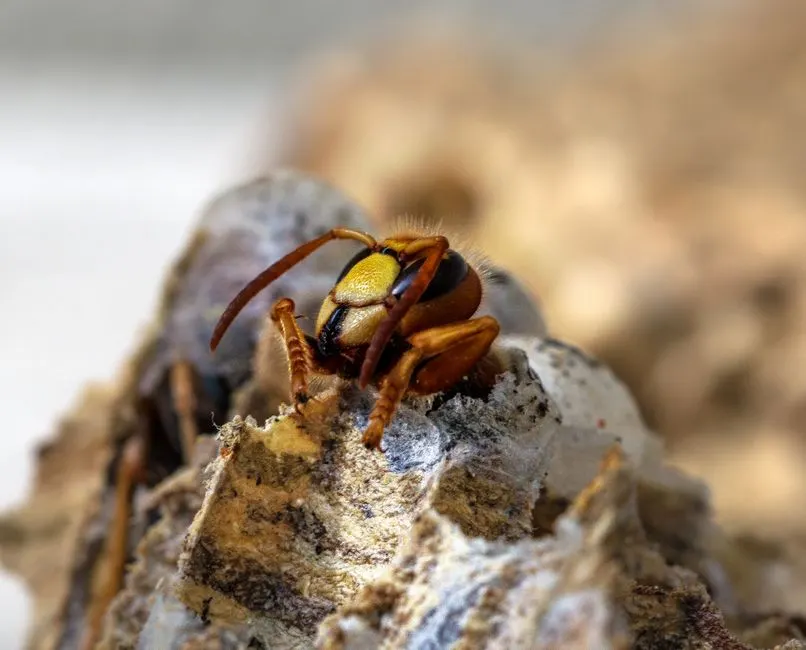
What hornet removal Pittsburgh PA actually involves
Hornet removal Pittsburgh PA is a licensed pest control service that locates, neutralizes and physically removes active hornet nests from homes, garages and commercial buildings. It is not the same as spraying a can of wasp killer at dusk. A proper job starts with identifying the species, mapping the entry points, and choosing a treatment that reaches the queen and the workers inside the paper envelope. We use a bee suit, a commercial insecticide sprayer and residual products like bifenthrin or fipronil so the nest is dead before anyone touches it.
Pittsburgh's housing stock makes this harder than it looks. Older homes in Squirrel Hill, Brookline and Mount Washington have deep eaves, brick voids and detached garages that give hornets sheltered spots to build. Bald-faced hornets, European hornets and yellow jackets all peak between late July and October, and a single nest can hold 400 to 700 workers by September. If you have been searching for hornet removal in Pittsburgh Pennsylvania near me and getting quotes that do not include a return visit, ask what happens if the nest is rebuilt.
Why Pittsburgh homeowners book hornet removal
A hornet nest near a doorway, play set or window is a safety problem, not a nuisance. Here is what our customers actually get when they book us.
Same-day nest knockdown
We keep same-day and next-day slots open for active nests near entry doors, decks and kids' play areas. Most single-nest jobs take 45 to 90 minutes on site, and you can use the yard again the same evening once the treated area has dried.
Nest removed, not just sprayed
Spraying a nest and leaving it in place invites yellow jackets and dermestid beetles to move in. We cut the nest down, bag it, and dispose of it off-site, then wipe the attachment point with a residual so scouts do not rebuild in the same corner.
Licensed, insured technicians
Every technician holds a PA Department of Agriculture Pesticide Applicator License and works under our EPA Certified and QualityPro standards. That matters when the nest is 20 feet up on a brick gable and someone has to go up a ladder in a bee suit.
Affordable hornet removal in Pittsburgh PA
Most single-nest jobs land between $185 and $425 in 2026, and we quote the price before we start. Multi-nest properties, attic colonies and commercial accounts get a flat written scope so there are no surprises on the invoice.
How our hornet removal process works
Five steps, one visit for most homes. Here is exactly what happens from the phone call to the follow-up check.
Phone triage
We ask where the nest is, how big it looks, and whether anyone has been stung. That tells us whether to send a standard technician or a two-person crew with an extension pole. You get a price range on the call and a firm quote before we start work.
On-site inspection
The technician walks the property with a UV flashlight and a ladder, checking eaves, soffits, shutters, dryer vents and the gap behind brick. We confirm species, count active nests, and identify entry points so the treatment plan covers the whole structure, not just the visible nest.
Targeted treatment
We apply a residual insecticide like bifenthrin or fipronil directly into the nest opening using a commercial sprayer, usually at dusk when the colony is inside. Knockdown takes 10 to 20 minutes. We never use foggers on an active nest because they scatter workers instead of killing them.
Physical nest removal
Once the colony is dead, we cut the nest down, seal it in a bag, and remove it from the property. We scrape the attachment point, treat the surface, and check the surrounding 10 to 15 feet for satellite nests that often hide behind siding or in the corner of a garage.
Follow-up and prevention
We schedule a return check 7 to 14 days out on any job where the nest was inside a wall void or attic. If workers are still active, we retreat at no extra charge. You also get a short list of exclusion fixes, like sealing a 1/4-inch gap under a soffit, that keep the next colony out.
Hornet removal expertise built in Pittsburgh
We have been removing hornet nests across Allegheny County since 2018, and our technicians are trained on the three species that cause almost every call in this region: bald-faced hornets, European hornets and German yellow jackets. Every tech carries a PA Department of Agriculture Pesticide Applicator License and works under Integrated Pest Management (IPM) Certified protocols, which means we identify the species first and treat second. We are an NPMA Member and a Pennsylvania Pest Management Association Member, and our field teams train annually on ladder safety, bee suit use and the insect growth regulators that stop a colony from rebuilding.
- 8 years serving Pittsburgh and Allegheny County homes, schools and small businesses
- Licensed under the PA Department of Agriculture Pesticide Applicator program
- EPA Certified applicators trained on fipronil, bifenthrin and imidacloprid use
- Integrated Pest Management (IPM) Certified approach: identify, treat, exclude, monitor
- QualityPro and NPMA Member standards on every residential and commercial job
Why our hornet removal Pittsburgh PA team gets called back
We are not the biggest pest company in Western Pennsylvania, and that is on purpose. Small crews mean the person who quotes your job is often the person who does it, and you get a real phone number, not a call center.
Same-day and 24/7 dispatch
Active nest on a front porch or over a daycare entrance? We run hornet control in Pittsburgh Pennsylvania 24/7 for urgent calls, and we can usually have a technician on site within 2 to 4 hours inside the I-279 and I-376 loop.
Flat, upfront pricing
You get a firm price before we open the truck. Single-nest jobs run $185 to $425 in 2026, and multi-nest or attic jobs are scoped in writing. No hourly creep, no surprise ladder fees, no charge for the 7 to 14 day follow-up.
Nest removal, not just a spray
Our hornet exterminator Pittsburgh PA crews cut down and bag every accessible nest, then treat the attachment point with a residual. That is the difference between a nest that is gone and a nest that gets rebuilt in the same corner three weeks later.
Work backed by a written warranty
If hornets rebuild at the same attachment point within our warranty window, we come back and treat it at no cost. We put that in writing because we would rather fix it than argue about it. Call 1234567890 and we will tell you straight what your job needs.
What is included in our hornet removal service
Every hornet job is scoped to the property, but most residential calls include the same core work. Here is what you get when you book us, and what we quote separately if the situation calls for it.
What's Included
Full exterior inspection
We walk the whole perimeter with a ladder and UV flashlight, checking eaves, soffits, shutters, vents, gutters and the gap behind brick. Most homes have more than one nest, and finding the second one on the first visit saves you a callback.
Species identification
Bald-faced hornets, European hornets and yellow jackets need different treatment approaches. We confirm the species before we treat, because using the wrong product on a ground-nesting yellow jacket colony can push workers into the yard instead of killing them.
Targeted nest treatment
We apply a residual insecticide such as bifenthrin or fipronil directly into the nest opening with a commercial sprayer, usually at dusk. Knockdown takes 10 to 20 minutes, and we do not use foggers on active nests.
Physical nest removal
Once the colony is dead, we cut the nest down, bag it and remove it from the property. We scrape and treat the attachment point so scouts do not rebuild in the same corner, and we check the surrounding 10 to 15 feet for satellite nests.
Follow-up visit
Any job where the nest was inside a wall void, attic or soffit includes a return check 7 to 14 days later. If workers are still active, we retreat at no extra charge. This is included in the quoted price, not billed as a separate trip.
Exclusion recommendations
You get a short written list of the gaps we found, with sizes and locations, so you can seal them yourself or book our pest proofing service. Sealing a 1/4-inch soffit gap is the single best way to stop the next colony.
Hornet problems we solve for Pittsburgh homeowners
Hornets are not just annoying. They sting repeatedly, they nest in places you cannot reach, and they get worse every week from July through October. Here are the situations we get called about most.
Active nest over a doorway or deck
Every time someone walks in or out, workers get agitated. One wrong move and you have multiple stings, which is a real risk for kids, older adults and anyone with a venom allergy.
We treat the nest at dusk when the colony is inside, then remove it the next morning. Most jobs are done in under 90 minutes, and you can use the doorway again the same evening once the treated area is dry.
Nest inside a wall void or attic
You hear scratching and buzzing behind drywall or in the attic, and workers sometimes find their way into living space through outlets and light fixtures. Spraying from outside does nothing because the nest is sealed behind the wall.
We locate the entry point, drill a small access hole if needed, and apply a residual dust or foam directly onto the nest. The colony dies inside the void, and we schedule a 7 to 14 day follow-up to confirm no workers remain.
Yellow jackets nesting in the ground
Ground nests are the most dangerous because you cannot see them until someone steps on the entry hole. Mowing the lawn or walking the dog can trigger a mass sting event, sometimes 20 or more stings in seconds.
We mark the hole, treat after dark when all workers are inside, and seal the entrance the next day. We also check the surrounding yard for satellite holes, which are common in Pittsburgh's sloped and wooded lots.
Hornets rebuilding in the same spot every year
If the attachment point is not treated and sealed, a new queen will start a nest in the same corner the following spring. Homeowners end up paying for the same job three summers in a row.
We scrape and treat the attachment point with a residual, then give you a written list of the gaps to seal. Most customers who follow the exclusion list do not see a nest at that spot again for years.
When to call for hornet removal in Pittsburgh
A bald-faced hornet nest appears under the soffit of a two-story Squirrel Hill home in early August, right above the back door.
We schedule a dusk treatment the same day, apply a residual into the nest opening with an extension pole, and return the next morning to cut the nest down and treat the attachment point.
The nest is gone in under 24 hours, the doorway is safe to use, and the treated soffit gap is sealed so a new colony does not start there next spring.
A restaurant in the Strip District finds yellow jackets nesting in the wall behind the loading dock in September, with workers getting inside the prep area.
We treat the exterior entry point after close, apply a residual dust inside the wall void, and set monitoring glue boards near the interior door. Documentation is provided for the health inspection file.
Activity stops within 48 hours, the loading dock is clear, and the restaurant passes its next inspection with the treatment record on file.
A homeowner in Mt. Lebanon hears buzzing behind the drywall in the upstairs bedroom and finds workers coming out of an outlet in late July.
We locate the exterior entry point, drill a small access hole, and apply a residual dust directly onto the nest inside the void. A follow-up check is scheduled for day 10.
The colony is dead inside the wall, no workers are entering the bedroom, and the access hole is patched and sealed so nothing else gets in.
A property manager in Oakland needs hornet and yellow jacket nests cleared from three porches across a six-unit building before a weekend open house.
We send a two-person crew, inspect all six units, treat the active nests at dusk, and return the next morning to remove them and seal the entry points.
All three nests are removed in under 36 hours, the porches are safe for the open house, and the manager gets a written report with photos for the owners.
Tools and methods we use for hornet removal
Tools & Equipment
Commercial insecticide sprayer
Delivers a measured stream of residual insecticide directly into the nest opening from up to 20 feet away, so the technician stays out of the flight path.
Bee suit and sting-resistant gloves
Full-body protection rated for hornet work, especially on ladder jobs where the technician is within a few feet of an active nest.
Extension poles and ladders
Reach nests on second-story soffits, gable vents and rooflines without putting the technician in the middle of the colony's flight path.
UV flashlight
Locates hidden nests and entry points in dark voids, attics and crawl spaces where a standard flashlight misses the paper envelope.
Thermal imaging camera
Detects the heat signature of an active colony inside a wall or attic void, so we can confirm the nest location before drilling.
Sealing bags and scrapers
Used to cut down the nest, bag it, and scrape the attachment point clean before applying a residual treatment to the surface.
Exclusion mesh and sealants
Close the 1/4-inch soffit, vent and utility gaps that let hornets, mice and stink bugs into the structure after the nest is removed.
Methods
Integrated Pest Management (IPM)
We identify the species, inspect the property, treat the smallest effective area, and then use exclusion and monitoring to prevent a rebuild. This is the standard we follow on every hornet job, and it is why we do not fog an active nest.
Dusk treatment protocol
Hornets are inside the nest after dark. Treating at dusk means we hit the whole colony at once, including the queen, instead of scattering workers across the yard. This is the single biggest safety factor on any hornet job.
Residual insecticide application
We use products containing bifenthrin, fipronil or imidacloprid, applied to the nest and the attachment point. The residual keeps working for weeks, so any worker that returns to the site is killed before it can rebuild.
Exclusion and sealing
After the nest is removed, we seal the entry gap with exclusion mesh and a sealant rated for Pittsburgh's freeze-thaw cycles. This is the step that stops the same problem from coming back next summer.
Follow-up monitoring
For wall void and attic jobs, we schedule a 7 to 14 day return check. If workers are still active, we retreat at no charge. This is included in the quoted price and is part of our written warranty.
How hornet removal runs in Pittsburgh specifically
Pittsburgh's housing stock and climate shape every hornet job we run. Most of the city's older homes were built between 1900 and 1950 with deep eaves, brick veneer and detached garages, and those are exactly the spots bald-faced hornets and European hornets prefer. The steep hillsides in Mount Washington, Fineview and Perry South mean more retaining walls and stone terraces, which give ground-nesting yellow jackets plenty of places to burrow. Our season runs from late April, when overwintering queens start scouting, through October, when the last workers die off. Peak call volume hits between mid-August and late September, when colonies are at their largest. If you need hornet control in Pittsburgh Pennsylvania 24/7 during that window, we keep evening and weekend slots open because dusk is when the treatment actually works. We also work around the city's older wiring and slate roofs, which means no drilling into a wall void without confirming the nest location first with a thermal imaging camera.
Service Areas
Large older homes with deep soffits and mature trees. Bald-faced hornet nests are common under second-story eaves and in the branches overhanging driveways.
Steep lots with retaining walls and stone terraces create ideal ground-nesting habitat for yellow jackets. We check the slope behind the house on every call.
Row houses with shared walls mean a nest in one unit can push workers into the neighbor's attic. We inspect both sides of the party wall when the nest is in a void.
Commercial loading docks and warehouse awnings attract yellow jackets near food waste. We schedule treatments after close so we do not disrupt business hours.
Larger lots with detached garages and mature hedges. Hornets often nest in the garage eave and the hedge line, so we treat both on the same visit.
Local Considerations
Warm, humid summers with a late first frost
Colonies stay active into October in most years, which means the treatment window is longer and the nests get bigger. We plan follow-up checks accordingly.
Older brick and slate construction
Brick voids and slate roof gaps give hornets sheltered entry points that are hard to see from the ground. We use thermal imaging to confirm nest location before drilling.
Steep hillside lots and retaining walls
Ground-nesting yellow jackets burrow into the soil behind stone walls, which makes them easy to miss. We mark and treat every hole we find on the slope.
Freeze-thaw cycles in winter
Gaps in soffits and utility penetrations open wider over time. We recommend sealing them in fall so the next spring's queens cannot get inside.
Bald-faced hornet nest under Squirrel Hill soffit
A homeowner in Squirrel Hill had a basketball-sized bald-faced hornet nest under the second-story soffit, right above the back door. Workers were hitting anyone who used the steps, and two family members had already been stung. The nest had been growing for about six weeks.
We treated the nest at dusk with a residual insecticide, returned the next morning, and removed the entire nest plus a smaller satellite nest behind the shutter. Total on-site time was about 90 minutes. The family was back to using the back door the same evening.
Maintenance & Follow-up
We sealed the soffit gap with exclusion mesh and treated the attachment point with a residual. The homeowner has not seen a hornet at that spot in two seasons.
A Mount Washington homeowner was stung four times while mowing the lawn near a stone retaining wall. The nest entry hole was hidden in the mulch at the base of the wall, and the colony had grown to several hundred workers by mid-September.
We marked the hole, treated it after dark with a residual dust, and sealed the entrance the next morning. We also found and treated a second satellite hole three feet away. Activity stopped within 24 hours and the yard was safe for the family and the dog.
Maintenance & Follow-up
We recommended re-checking the wall base each August, since the same slope is prime yellow jacket habitat. A perimeter treatment in early summer keeps the population down.
A Lawrenceville row house had European hornets nesting inside the wall between the kitchen and the back bedroom. Workers were coming out of an outlet cover, and the neighbor was starting to see activity on their side of the party wall. The nest had been active for at least a month.
We located the exterior entry point, drilled a small access hole, and applied a residual dust directly onto the nest inside the void. The colony died within 48 hours. We returned on day 10 to confirm no workers remained, then patched and sealed the access hole.
Maintenance & Follow-up
We sealed the exterior entry gap and treated the attachment point. The homeowner was advised to check the party wall side in spring, since row house voids are shared between units.
How much does hornet removal cost in Pittsburgh Pennsylvania?
Most single-nest hornet removal in Pittsburgh Pennsylvania runs $185 to $425 in 2026, with the average job landing near $265. Price depends on nest height, whether it is inside a wall void or attic, and how many active nests are on the property. Multi-nest and commercial jobs are quoted flat after an on-site inspection.
Who is the best hornet exterminator in Pittsburgh PA?
The right hornet exterminator Pittsburgh PA homeowners should hire is one who is licensed, carries liability insurance, and removes the nest instead of just spraying it. Ask for the PA Department of Agriculture Pesticide Applicator License number and confirm the quote includes a follow-up visit. We have served Allegheny County since 2018 and put all of that in writing.
How to get rid of hornets in Pittsburgh Pennsylvania?
Getting rid of hornets in Pittsburgh Pennsylvania safely means treating the nest at dusk with a residual insecticide, waiting for the colony to die, then cutting the nest down and sealing the attachment point. Do not use a fogger or a hardware-store spray during the day, because it scatters workers and increases the sting risk. If the nest is inside a wall, call a licensed technician.
Are hornets dangerous in Pittsburgh Pennsylvania?
Yes. Bald-faced and European hornets in Pittsburgh Pennsylvania can sting repeatedly, and a single colony can hold 400 to 700 workers by late September. For most people the sting is painful but not an emergency. If anyone in the home has a known venom allergy, treat an active nest near a doorway as urgent and call us the same day.
Licensed, insured and reviewed in Pittsburgh
Certifications
Reviews
Called about a hornet nest under the eave on a Tuesday morning and they were out by 4 pm the same day. Technician explained everything, treated at dusk, and came back the next morning to remove the nest. Price was exactly what was quoted on the phone.
We had yellow jackets in the ground near the back patio and could not use the yard for a week. They treated after dark and sealed the hole the next day. Follow-up visit confirmed everything was dead. Fair price and no upselling.
Property manager here. They handled hornet nests at two of my Oakland units in under 48 hours and gave me a written report with photos for the owners. Flat pricing, no hourly surprises, and they answered every call.
European hornets inside the wall of our Lawrenceville row house. They found the entry point, treated the void, and came back on day 10 to confirm. No more buzzing, no more workers in the bedroom. Highly recommend.
Related pest services we handle in Pittsburgh
Ant Control
Carpenter ants and pavement ants often move into the same soffit voids and brick gaps hornets use. If you are already up on a ladder for hornet removal, we can inspect and treat ant trails on the same visit and save you a second trip.
Ant ControlBed Bug Treatment
Bed bugs need a completely different protocol: heat, insect growth regulators and follow-up inspections at 14 and 30 days. We keep separate equipment and scheduling for bed bug jobs so there is no cross-contamination between properties.
Bed Bug TreatmentBee & Wasp Removal
Honey bees, paper wasps and mud daubers need different handling than hornets. Honey bees are protected and often relocated rather than treated. If you are not sure what is under the eave, we identify the species first and quote the right service.
Bee & Wasp RemovalBird Control
Starlings and sparrows nest in the same soffit gaps and dryer vents hornets use. We install exclusion mesh and spikes so birds stop opening the entry points that let hornets and yellow jackets inside the wall cavity.
Bird ControlCockroach Control
German cockroaches thrive in the same warm, humid voids behind kitchen walls where hornets sometimes nest in summer. Our bait station and insect growth regulator program clears roaches without fogging, which matters in multi-unit Pittsburgh buildings.
Cockroach ControlCommercial Pest Control
Restaurants, warehouses and property managers across Allegheny County get scheduled hornet and wasp service on loading docks, awnings and rooftop HVAC units, with documentation for health inspections and OSHA Compliance records.
Commercial Pest ControlCricket Control
Camel and house crickets pile up in damp basements and crawl spaces in Pittsburgh's older housing stock. We treat perimeter and interior harborage points with residual products and glue boards to knock down the population in one or two visits.
Cricket ControlEarwig Control
Earwigs hide in mulch beds, downspout splash zones and under siding, often right where hornets build. A perimeter treatment plus moisture correction around the foundation handles both problems in a single service window.
Earwig ControlFlea & Tick Treatment
Yards with heavy shade and wildlife traffic in Pittsburgh's parks-adjacent neighborhoods carry both fleas and ticks. We treat lawn edges, mulch lines and pet resting areas with residual products and insect growth regulators to break the life cycle.
Flea & Tick TreatmentFly Control
Cluster flies and blow flies show up in attics and wall voids, sometimes in the same cavity a hornet nest occupied. We locate the entry point, treat the void and install exclusion so flies stop reappearing every warm afternoon.
Fly ControlGopher Control
Pocket gophers damage lawns and garden beds in the hillier Pittsburgh suburbs. We use bait stations and monitoring to clear active runs, then seal the tunnels so the next gopher does not move in from the neighboring lot.
Gopher ControlMosquito Control
Standing water in clogged gutters and old French drains breeds mosquitoes from May through September. Our barrier and larvicide treatment cuts the population around patios and decks, which pairs well with a hornet job on the same property.
Mosquito ControlMoth Control
Clothes moths and pantry moths need targeted pheromone traps and sanitation, not a general spray. We identify the species, treat the harborage and give you a short list of storage changes that stop the cycle.
Moth ControlMouse Control
Mice use the same 1/4-inch gaps hornets use to get into wall voids. We seal those entry points with exclusion mesh, set rodent traps and glue boards inside, and check the attic for droppings that can carry disease.
Mouse ControlPest Inspections
A full inspection covers attic, crawl space, garage and exterior perimeter. We use moisture meters, thermal imaging cameras and UV flashlights to find hidden activity, then give you a written report with photos and a prioritized treatment plan.
Pest InspectionsPest Proofing & Exclusion
Sealing soffit gaps, dryer vents, utility penetrations and foundation cracks is the single best way to stop hornets, mice and stink bugs from getting inside. We use exclusion mesh and sealants rated for Pittsburgh's freeze-thaw cycles.
Pest Proofing & ExclusionRat Control
Norway rats in Pittsburgh's alley-heavy neighborhoods need bait stations, rodenticide rotation and burrow treatment, not just traps. We monitor activity weekly until the population is down, then move to a maintenance schedule.
Rat ControlRodent Control
Mice and rats inside a home leave droppings, chew wiring and trigger allergies. Our program combines trapping, exclusion and sanitation, with follow-up checks at 14 and 30 days to confirm the population is gone.
Rodent ControlSilverfish Control
Silverfish live in the same humid voids and attic corners hornets favor. We treat with diatomaceous earth and residual dusts, then correct the moisture source so the population does not rebound after the first service.
Silverfish ControlSpider Control
Wolf spiders, cellar spiders and yellow sac spiders show up in basements and garages across Allegheny County. We treat harborage points, knock down webs and reduce the insect food source that keeps spiders coming back.
Spider ControlStink Bug Control
Brown marmorated stink bugs invade Pittsburgh homes every fall through the same soffit and window gaps hornets use in summer. Exclusion work plus a perimeter treatment in September keeps them out of living spaces.
Stink Bug ControlTermite Inspections
Subterranean termites are active across Allegheny County, and a hornet inspection is a good time to check the same crawl space and sill plate. We use termite detectors and moisture meters to catch activity before damage spreads.
Termite InspectionsTermite Treatment
We install termite bait stations and liquid barrier treatments around the foundation, then monitor quarterly. This is a separate scope from hornet removal, but both are often scheduled together on older Pittsburgh homes with crawl spaces.
Termite TreatmentTick Control
Blacklegged ticks carry Lyme disease and thrive in the wooded edges of Pittsburgh's parks and greenways. Our yard treatment targets leaf litter, stone walls and deer trails, with a second application timed to the late-summer nymph peak.
Tick ControlWildlife Removal
Squirrels, raccoons and bats use the same roof gaps and soffit voids hornets nest in. We handle humane removal, entry-point repair and sanitation, and we follow Pennsylvania wildlife regulations on timing and relocation.
Wildlife RemovalWood Destroying Insect Treatment
Carpenter ants, powderpost beetles and termites all damage structural wood. We identify the insect, treat the galleries and repair the moisture problem that attracted them, with documentation suitable for real estate transactions.
Wood Destroying Insect TreatmentYellow Jacket Removal
Yellow jackets nest in ground holes, wall voids and soffits and are far more aggressive than hornets near food. We locate the entry, treat at dusk and remove the nest, then seal the void so the colony does not return next season.
Yellow Jacket RemovalWhat Pittsburgh customers say about us
Real experiences from customers who chose our Hornet Removal services
"We had a bald-faced hornet nest the size of a basketball under the second-floor soffit. They came out the same afternoon, treated it at dusk, and cut the nest down the next morning. Total was $295, which was less than the two other quotes I got. No stings, no drama, and they sealed the gap so nothing has come back."
Danielle R.
Homeowner, Squirrel Hill
"I manage six rental units and had yellow jackets and hornets in two of them at the same time. Their crew did a walkthrough of all six, treated the active nests, and gave me a written report with photos for the owners. Turnaround was under 48 hours and the pricing was flat, not hourly."
Marcus T.
Property Manager, Lawrenceville
"I called on a Saturday morning because my kids could not use the backyard. They were at the house by 1 pm, found a second nest behind the shutters I had not noticed, and treated both. The follow-up visit two weeks later confirmed everything was dead. Worth every dollar."
Priya S.
Homeowner, Mt. Lebanon
Get hornet removal Pittsburgh PA scheduled today
Active nest on the porch, in the attic or over the garage? Call 1234567890 and we will give you a firm price and a same-day or next-day window. Licensed, insured, and backed by a written warranty on every hornet removal Pittsburgh PA job.